RICA and stakeholders officially launch the national safe and quality meat campaign
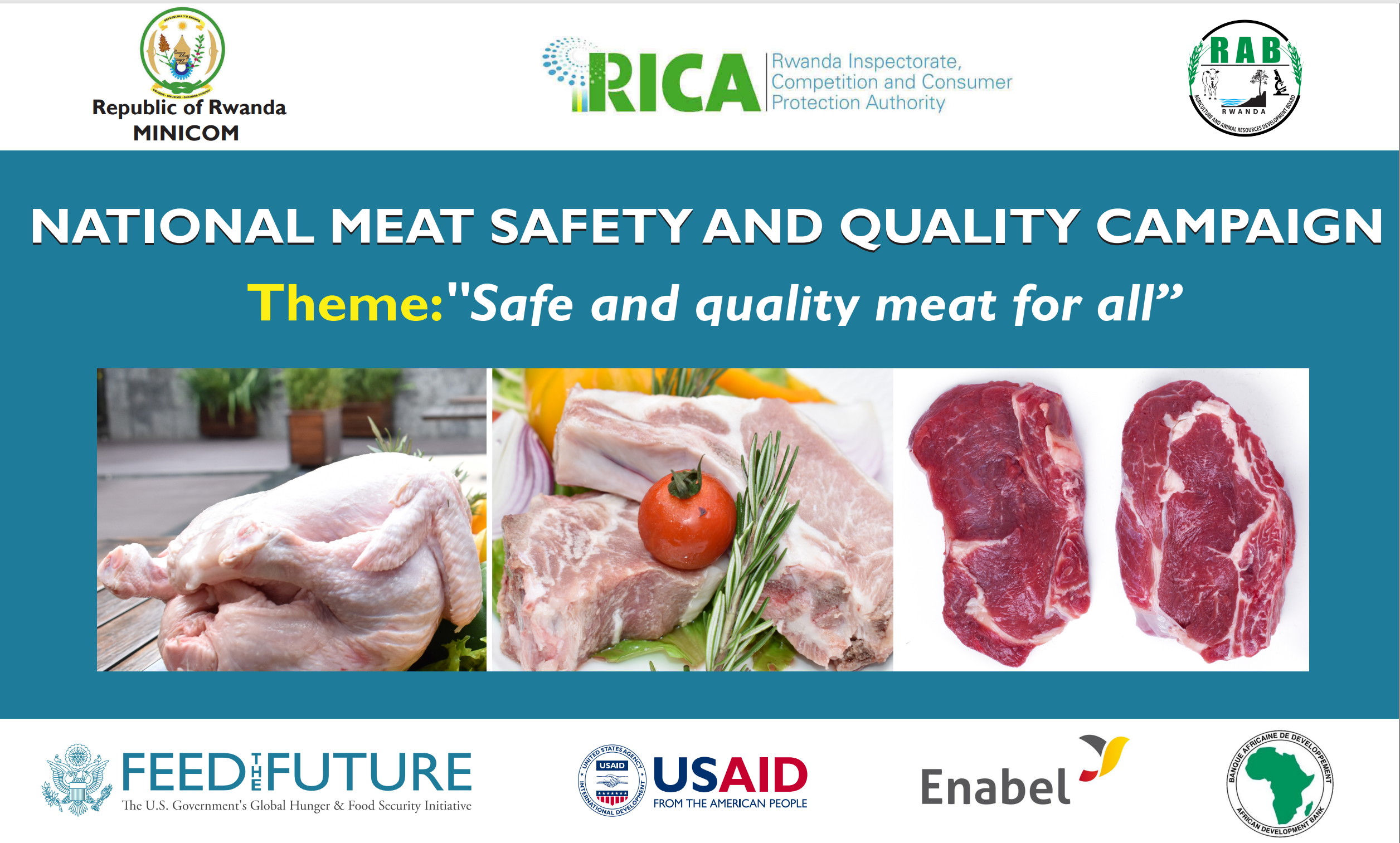
Rwanda Inspectorate, Competition and Consumer Protection Authority (RICA) in partnership with different institutions and projects on Thursday launched the national safe and quality meat campaign to raise awareness of meat value chain and ensure its compliance with safety and quality standards from the farm, abattoirs, transportation to the market, butcheries to the last consumer.
This campaign started on May 17th with a press conference to mobilize the media houses in disseminating the message on safety and quality of meat to a wider audience. It is envisaged to be extended till June 13th, 2022 under support of different development partners as well as the local government.
Themed “Safe and quality meat for all”, this campaign will improve meat safety and quality in order to increase its competitiveness and unlock new business opportunities both on domestic and regional markets hence increasing meat value chain contribution to Rwanda’s economy.
It will also provide a unique opportunity for industry operators and stakeholders to reflect on concrete strategies and needed infrastructures to increase the quality of meat as a key to enter into new markets while also raising awareness of consumers’ rights to safe and quality meat processed and sold in hygienic conditions.
The campaign is a joint effort implemented by RICA in partnership with different institutions including the AfDB-funded Meat Competitiveness Project under MINICOM/ SPIU, The USAID Feed the Future funded Orora Wihaze Activity, PRISM/ ENABEL and PRISM/IFAD under MINAGRI in order to streamline the meat value chain towards the production and trade of safe and quality meat.
Speaking to the media Beatrice Uwumukiza, the acting Director General of RICA said the campaign aims at sensitizing current actors in the meat value chain, from farmers to consumers to comply with the standards and regulations governing the meat business in Rwanda.
“We want to ensure the safety and quality of meat starting from farmers to last consumers”, she said adding that citizens who are the consumers of meat, countrywide, will be also sensitized about their rights to safe and quality meat.
Uwumukiza encouraged the private sector to invest in meat safety and quality by complying with the current standards and technical regulations in place to increase market supply for both local and international.
“Assuring high level of safety and quality of meat, requires a certain level of investment in quality infrastructure and equipment along the meat value chain including investment starting from professional farming, sustainable transport, slaughterhouses, meat cuttings as well as cold chain infrastructures.”, She added.
During the event, every stakeholder in the meat value chain presented the current status and interventions needed to improve meat safety and quality in order to increase its competitiveness and unlock new business opportunities both on domestic and regional markets.
Alexis Kabayiza, the Chief Technical Advisor at the Ministry of Trade and Industry insisted on collective efforts by each of all concerned parties to solve problems that are nowadays still affecting safety and quality of meat in Rwanda.
“I hereby call for enforcement of regulations and collaboration of all stakeholders including local government to strictly conduct joint regular inspections to improve the safety and quality of meat industry”, He said adding that measures will follow for those not complying with safety and quality regulations as well as laws in Meat Value Chain.
To realise the potential of the meat industry, more efforts are being initiated by RICA and stakeholders. These include but not limited to the recent approved Technical Regulation governing meat business and the other important documents initiated by the Government in pipeline such as the livestock master plan, the National Meat Value Chain Strategy and the draft law governing animal health and production which is in process of approval.
RICA has also a plan to register and publish the list of all authorized butcheries and is undergoing an activity to work with skilled professional Private Meat Inspectors in order to offer affordable, safe and quality meat for all.